Validate supplier certifications by checking certificate validity, jurisdictional scope, and labeling accuracy. This checklist helps buyers confirm regulatory compliance and identify audit risks before placing medical product orders.
- Check the issue date and expiration date on every certificate before accepting a supplier.
- Confirm that the scope of the certificate covers the specific product categories and manufacturing locations you plan to buy from.
- Verify that physical labels match the claims made in the certification documents.
- Ask for the most recent audit reports to confirm the certification is not just a paper formality.
Start with the Certificate Document Itself
The certificate is the primary gatekeeper in the verification process. Do not open the technical data sheet or the quality agreement first. Open the certificate. A buyer who skips this step often discovers compliance gaps only after a shipment is blocked at customs or a client audit fails.
Examine the physical layout of the document. Most certification bodies use standardized templates. The header usually identifies the issuing body, the location of the registered facility, and the specific product name. The body contains the scope of the certificate and the validity period. The footer holds the certificate number, issue date, and signature block.
The certificate number is the unique identifier. Treat it like a serial number. If you have purchased from this vendor before, pull the previous purchase order. Compare the old certificate number to the new one. A change in number is not automatically bad. It can signal a renewal, a scope change, or a transfer to a different facility. However, it requires an explanation. Ask the supplier to confirm why the number changed. If the number is missing, or if it is handwritten on a printed form, stop. A genuine certificate issued by a regulatory authority or a recognized body will always have a printed, machine-generated unique identifier.
Check the dates carefully. The issue date tells you when the certificate became active. The expiration date tells you when it stops. A certificate issued years ago may still be valid if it is a long-term certification that has been renewed. However, many certifications have a fixed term, such as two or three years. If the expiration date has passed, the certificate is void. Do not accept a vendor’s claim that the product is still compliant if the document shows an expired date. Ask for the current certificate.
The issuing body must be clearly printed. Look for the logo and the name. If the text is blurry, or if the logo differs from the official body’s branding, request a digital copy. Some vendors provide scanned PDFs of paper certificates. These are acceptable if the scan is clear. Do not accept a photo taken with a mobile phone as a primary document. The resolution is too low to verify fine print.
The manufacturer name on the certificate must match the legal entity on your purchase order. This is a common source of confusion. A brand name, such as “MediSafe,” is not the same as the legal manufacturer, which might be “MediSafe Holdings Ltd.” or a specific factory entity. If the certificate names a holding company but the product ships from a factory in a different country, you have a scope problem. The certification covers the entity named on the document. If the shipping entity is different, the certificate may not apply to that specific batch.
Confirm Jurisdictional Scope
A certificate is only as good as the region it covers. Regulatory frameworks are local. A certificate issued for the European market does not automatically cover the United States, Japan, or Australia. The requirements, standards, and labeling rules differ by country.
Check the jurisdiction statement. Does the document explicitly list the markets it covers? Some certificates state “Valid in EU Member States.” Others list specific countries. If the document contains only a general statement without a specific country or region, treat it as incomplete. Ask the supplier to clarify the geographic scope. If the supplier cannot provide a clear list of covered jurisdictions, the certificate is not sufficient for your market.
Check the product category. Certifications often cover broad categories. For example, a certificate might cover “sterile protective drapes” generally. It might not cover “single-use suture kits” or “implantable mesh.” If your product falls outside the listed category, the certificate does not protect you. Look for the specific product name, model number, or part number on the certificate. If the certificate lists only a class, such as “Class II medical devices,” you need to verify that your specific item is included in that class for your market.
Check the manufacturing site. A certification may cover a company headquarters but not the actual plant where the product is made. This is a critical distinction. If the certificate names “Factory A” in Country X, but the product is manufactured in “Factory B” in Country Y, the certification is likely invalid for that specific batch. The certification body audits the facility where the product is made. If the product moves to a new facility without re-certification, the old certificate does not apply. Always verify the shipping address against the facility name on the certificate.
Check the Regulatory Compliance Status
Regulatory compliance is not just about having a paper. It is about the product meeting specific technical and safety standards. For medical consumables, this often means compliance with regional health authority requirements. The certificate is evidence, but it is not the standard itself.
Ask for the registration number. In many markets, medical devices must be registered with a local authority before sale. This registration number is distinct from the certificate number. It is a unique ID assigned by the regulator. If the product requires registration in your market, the supplier should provide this number. Verify it against the regulator’s public database if one exists. If the supplier cannot provide a registration number for a product that legally requires one, the product is not legally sellable in that market.
Check the standard references. The certificate or the technical file should reference specific standards. For example, a sterile barrier packaging certificate might reference a standard for steam sterilization or EO sterilization. An implantable material certificate might reference biocompatibility standards. If the document lists no standards, only a general statement of “quality assurance,” it is weak evidence. Specific standard references allow you to verify that the product meets the technical requirements expected by the regulator.
Look for the date of the last compliance review. Regulatory requirements change. New labeling rules, material restrictions, or software updates may require re-evaluation. A certificate that has not been reviewed in the last two or three years may miss recent updates. Ask the supplier for the date of the last internal or external compliance review. If the last review was long ago, ask why no update has been performed. This does not necessarily mean the product is non-compliant, but it indicates a potential gap in the supplier’s quality management system.
Verify Medical Labeling Accuracy
Medical labeling is where many compliance failures happen. The label is the interface between the product and the user. If the label is wrong, the product can be rejected at the border or recalled after sale. The label must match the certificate, the registration, and the local regulations.
Check the language. Does the label match the language required in your target market? If you are importing into a non-English speaking region, the label must be in the local language or include a full translation. A label in English only is often insufficient for sale in markets that mandate local language instructions. Check the instructions for use. If the user must be able to understand how to use the product safely, the language must be clear and accessible.
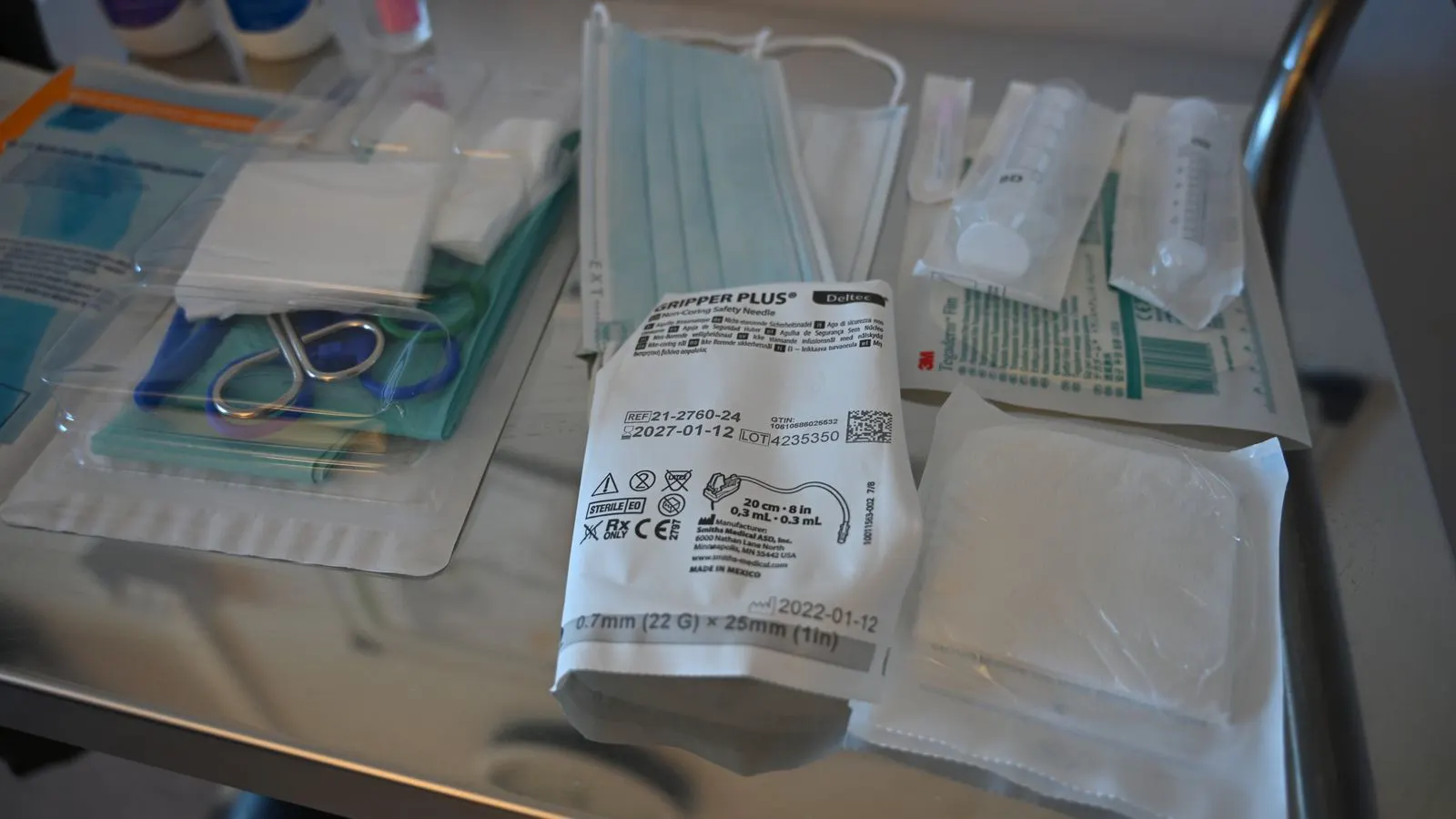
Check the required fields. Look for the manufacturer name, address, lot number, expiration date, and instructions for use. These are standard requirements in most markets. If any of these are missing, the product may not be legally sellable. The lot number is critical. It allows you to trace the product back to the manufacturing batch. Without it, you cannot conduct a recall if a defect is found. The expiration date must be clearly printed and legible.
Check the symbol usage. Medical devices often require specific symbols to indicate single use, sterile status, or biocompatibility. These symbols are standardized. If the symbols are missing, or if they are used incorrectly, the label is non-compliant. For example, a “single use” symbol must be present on single-use items. If a product is marked “single use” but the packaging allows for reuse, the symbol is misleading. If the sterile symbol is present but the packaging is damaged, the sterile status is compromised.
Compare the label to the certificate. The certificate may claim the product is sterile. The label must also state this. If the certificate says “sterile” but the label only says “clean,” there is a mismatch. This is a serious discrepancy. “Clean” and “sterile” are different levels of processing. “Sterile” means the absence of viable microorganisms. “Clean” usually means the removal of visible dirt and reduction of microbial load. A mismatch between the certificate and the label suggests that the product may not be processed to the level claimed by the certificate.
Review the Supplier Audit History
A supplier audit is a deeper check than the certificate. It looks at how the supplier manages quality internally. The certificate tells you the product is compliant. The audit tells you the supplier can maintain that compliance over time.
Ask for the last audit report. Reputable suppliers can share a summary or a certificate of completion. If they refuse to provide any information about their audit history, that is a red flag. You do not need the full report with sensitive details, but you need to know that an independent body has visited and reviewed their processes.
Check the audit scope. Did the auditor visit the factory? Or was it a document review only? A document review is less convincing than an on-site audit. An on-site audit allows the auditor to observe the production line, check the calibration of equipment, and interview staff. A document review only checks the paper records. For high-risk products, an on-site audit is strongly preferred. If the last audit was a document review, ask when the last on-site audit took place.
Look for corrective actions. If the last audit found issues, what did the supplier do to fix them? Audit reports often list findings categorized by severity. Minor findings might be missing a label. Major findings might be uncalibrated sterilization equipment. If the same issue appears in multiple audits, the supplier has a systemic problem. They are not fixing the root cause. They are just managing the symptoms. This indicates a weak quality culture.
Check the auditor’s credibility. Was the audit performed by an independent body, or was it self-declared? Independent audits carry more weight with regulatory authorities and internal risk teams. A self-declared audit is just a form filled out by the supplier. It has no external verification. Prefer audits conducted by recognized third-party bodies or internal quality teams that have documented independence from production operations.
Identify Red Flags in the Documentation
Some signs that a supplier may be misrepresenting their status are not obvious. Watch for these patterns. They often indicate that the supplier is not the actual manufacturer or that the product is not what it claims to be.
The certificate has no certificate number. A genuine certificate almost always has a unique identifier. If it is missing, you cannot verify it. Do not accept a document without a number. It is not a certificate. It is a statement.
The expiration date is in the future, but the issue date is in the past. This can be normal, but if the gap is too large, ask why the certificate was not renewed sooner. If the certificate was issued five years ago and expires in two years, and the current date is one year from the issue date, the certificate is valid. But if the issue date is five years ago and the expiration date is two years from now, the certificate is likely a renewal. Verify the renewal history.
The supplier cannot provide a digital copy. If they only have a paper copy, and it is old, it is hard to trust. In the modern era, certification bodies issue digital certificates. If the supplier only has a physical copy from ten years ago, they may not be up to date with current requirements.
The product name on the certificate is vague. “Medical supplies” is not a product name. “Sterile surgical gloves, size M” is. If the certificate lists a general category, ask for the specific product name and model number. If the supplier cannot provide it, the certificate is not specific enough to verify your product.
The address on the certificate does not match the shipping address. This is a common sign of a distributor selling products from a different manufacturer. If the certificate says “Manufacturer A, Location X” but the shipping label says “Distributor B, Location Y,” you have a supply chain gap. You need to verify that Distributor B is an authorized distributor of Manufacturer A and that the products are being shipped from Location X.
Build Your Verification Checklist
Use this checklist for every new supplier and for annual reviews of existing suppliers. It is a practical tool. Do not rely on memory. Do not rely on the supplier’s verbal assurance. Use the checklist to ensure every document is checked.
- Confirm the certificate number and match it to your records.
- Check the issue date and expiration date.
- Verify the manufacturing site matches the certificate scope.
- Check the jurisdictional scope for your target market.
- Confirm the product category matches your purchase.
- Review the regulatory compliance status and registration numbers.
- Check the medical labeling for required fields and language.
- Compare the label claims to the certificate claims.
- Request the last supplier audit report.
- Check for red flags in the documentation.
| Check Item | What to Look For | Red Flag |
|---|---|---|
| Certificate Number | Unique ID on the document | Missing or handwritten |
| Dates | Issue and expiration dates | Expired or future-dated without reason |
| Scope | Product category and site | Broad category without specifics |
| Labeling | Required fields and language | Missing lot number or wrong language |
| Audit | Independent report with findings | Self-declared only or no report |
Final Step: Keep a Document Trail
Do not rely on memory. Save a copy of every certificate, label photo, and audit report in a shared folder. Name the files with the supplier name and the certificate number. For example, “Acme Med - Cert 12345 - 2026.pdf”. If a regulator asks for proof of compliance, you should be able to pull the documents in minutes. A well-organized folder structure saves time during an audit.
Store the digital files securely. Access controls are important. Not everyone in your company should have access to sensitive supplier audit reports. Use a permission-based system. If the supplier updates their certificate, replace the old file with the new one. Do not delete the old version unless you have a policy for retention. A good record helps you defend your decisions if a product has issues later. If a product is recalled, you need to show that you verified the supplier’s compliance before purchase.
Review this process quarterly. Regulations change. Suppliers change. What was compliant last year may not be today. A quick check of the documents is cheaper than a recall or a shipment rejection. Set a calendar reminder. Assign a specific person to perform the quarterly review. Make it a standard part of the quality management routine.
Frequently asked questions
Can I accept a certificate from a holding company if the product is made at a subsidiary factory?
No. The certificate must cover the specific manufacturing site where the product is made. A holding company certificate does not cover a subsidiary unless the scope explicitly includes that factory.
What if the supplier says their certificate is "in progress"?
Do not place a large order. Ask for a timeline and a plan. If the product requires registration to be sold, you cannot import it without the certificate. Wait for the valid document.
Is a self-declared certificate enough for import?
Usually no. Most medical markets require verification by a third party or a regulatory authority. A self-declaration is weak evidence and may be rejected at customs.
How often should I re-verify supplier certifications?
At least once a year, and whenever the supplier changes its manufacturing site, product line, or regulatory status. Also verify before large orders or contract renewals.
What should I do if the label language is wrong?
Do not accept the shipment. Request a corrected label from the supplier. If the label is part of the packaging, the product may need to be relabeled before it can be sold.